0
฿0.00
An empty cart
You have no item in your shopping cart


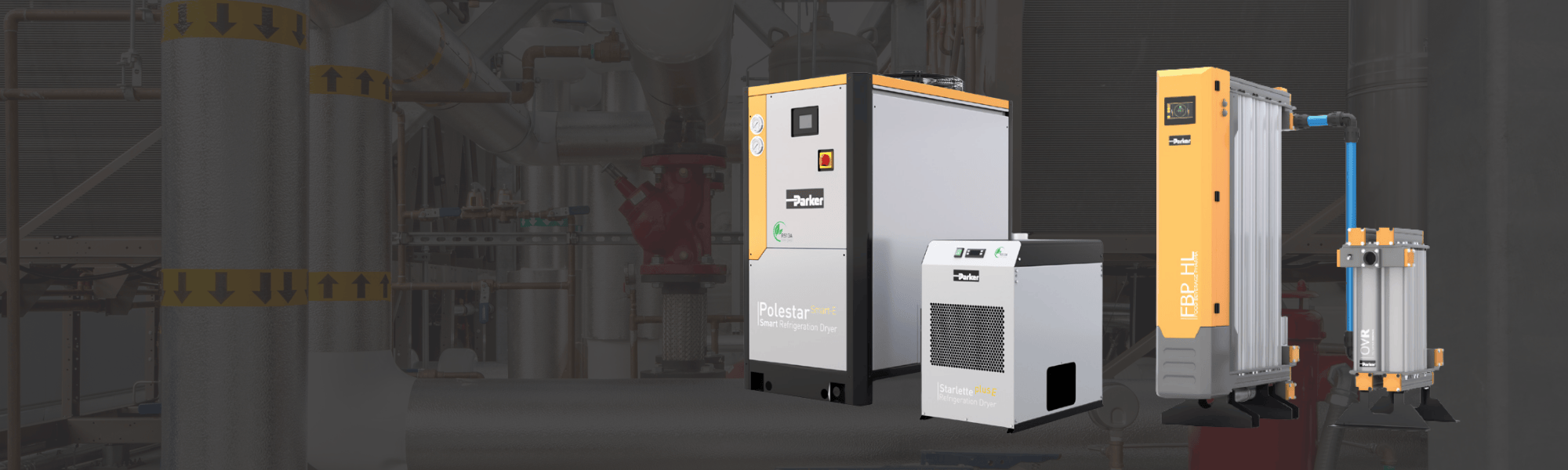
A clean, dry air supply is the foundation of every efficient compressed air system. Moisture in compressed air can cause corrosion, reduce product quality, and damage pneumatic equipment — all of which can lead to costly downtime. That’s why choosing the right air dryer is essential to keeping your system efficient, reliable, and ISO 8573-1 compliant.
Refrigerated air dryers are the most common type used across general industries. They work by cooling compressed air to temperatures between 2°C and 10°C, causing water vapor to condense into liquid and separate from the air stream. The result is clean, dry air suitable for most pneumatic systems.
Non-Cycling Type – The refrigeration compressor runs continuously, regardless of air demand.
Lower installation cost
Consumes more electrical power
Best suited for applications with a steady and continuous air load
Cycling Type – The compressor activates only when cooling is required.
Saves energy during periods of low air demand
Higher initial investment cost
Ideal for facilities with fluctuating air usage or intermittent operation
Advantages:
Simple system design and easy maintenance
Compact size, quick installation
Lower operating costs compared to desiccant systems
Suitable for general industrial use, pneumatic tools, and automation lines
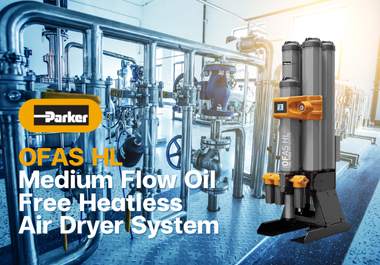
For industries where even small traces of moisture can cause contamination or product damage — such as food, pharmaceutical, and electronics — a desiccant air dryer is the right choice. This system uses adsorbent materials to remove water vapor, achieving extremely low dew points from -40°C to -70°C.
| Type | Regeneration Method | Key Advantages | Recommended Use |
|---|---|---|---|
| Heatless Type | Uses a portion of dry air (~15%) for regeneration | Simple, no heater required | Areas without power supply or small systems |
| Heated Type | Uses an electric heater and minimal purge air (~5–7%) | More energy efficient | Medium-sized systems |
| Blower Purge Type | Uses blower and heater, no purge loss | Lowest air loss | Large-scale plants seeking energy savings |
| Heat-of-Compression Type (HOC) | Uses compressor heat for regeneration | Most energy efficient | Large oil-free compressor systems |
| Criteria | Refrigerated Air Dryer | Desiccant Air Dryer |
|---|---|---|
| Working Principle | Cools air to condense moisture | Adsorbs moisture using desiccant beads |
| Dew Point | +2°C to +10°C | -40°C to -70°C |
| Best For | General industry, pneumatic tools | Food, pharma, electronics, clean environments |
| Initial Cost | Lower | Higher |
| Energy Use | Lower | Higher (especially Heatless Type) |
| Maintenance | Simple | More complex, requires desiccant care |
| Air Loss (Purge) | None | 5–15% depending on type |
| Environment Suitability | Not for freezing conditions | Works in all climates |
| ROI | Fast payback | Worth it for high-spec applications |
In summary, refrigerated dryers are ideal for general industrial operations seeking reliability and cost-efficiency, while desiccant dryers are the go-to for critical environments requiring ultra-dry air and precision.
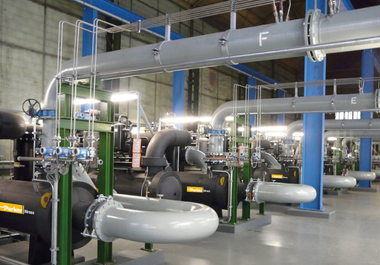
With over 30 years of experience, Domnick (Thailand) has become a trusted name in compressed air and energy management. Our team of experts provides in-depth consultation, system design, and turnkey installation — ensuring every air dryer and filtration system meets ISO 8573-1:2010 air quality standards.
We specialize in helping factories achieve:
Consistent air quality for improved product reliability
Energy-efficient systems that lower operational costs
Custom-engineered solutions for each application
Preventive maintenance and system optimization
At Domnick, we don’t just sell equipment — we deliver peace of mind through engineering expertise and proven results.

Efficient air systems save costs, ensure clean supply, and extend equipment life. Domnick (Thailand) can help design or upgrade yours.