0
฿0.00
An empty cart
You have no item in your shopping cart


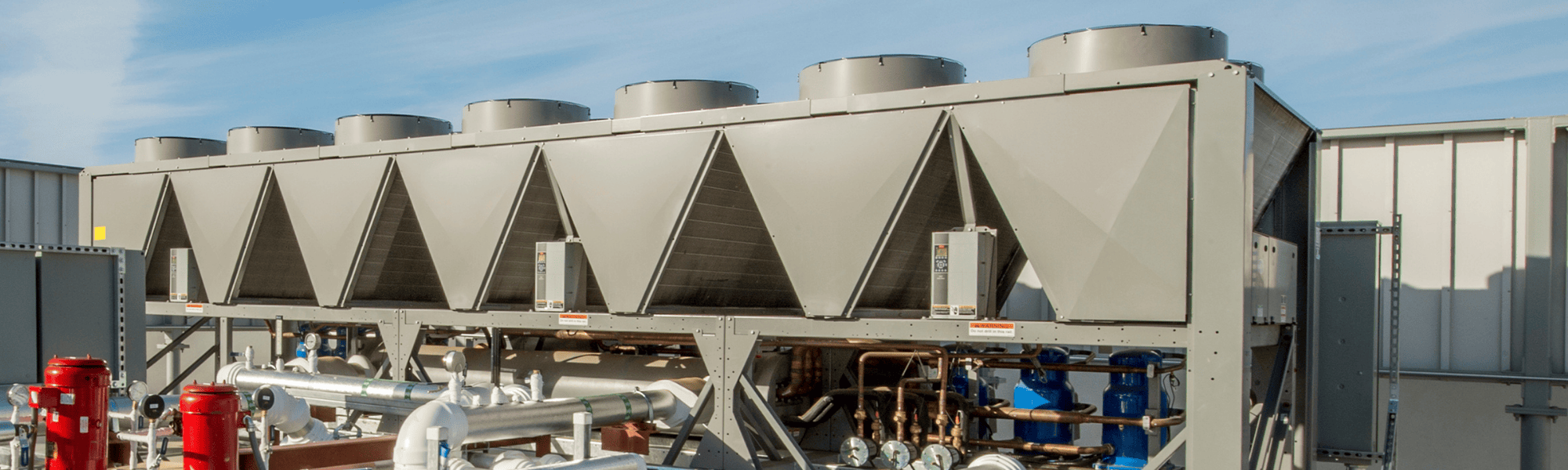
Chillers are the heart of many HVAC systems in commercial buildings, industrial facilities, hospitals, and data centers. Whether you are cooling a high-rise office tower or supporting critical manufacturing processes, chillers help remove heat and maintain stable indoor environments. However, operating chillers can be one of the most significant energy expenses in a facility. That’s why understanding chiller efficiency, and how to improve it, is essential for reducing costs, minimizing carbon emissions, and improving performance.
Chiller efficiency describes how effectively a chiller converts electrical energy into cooling output. A high-efficiency chiller delivers more cooling per unit of electricity consumed, which translates to lower operating costs and a more sustainable system.
Several industry metrics are used to measure chiller efficiency, including:
Coefficient of Performance (COP)
Energy Efficiency Ratio (EER)
Integrated Part Load Value (IPLV)
Non-Standard Part Load Value (NPLV)
Each of these metrics provides insight into performance under different conditions.
The Coefficient of Performance (COP) is one of the most fundamental measures of chiller efficiency. It is the ratio of useful cooling provided to the energy input required:
COP = Cooling Output ÷ Power Input
A higher COP means the chiller delivers more cooling for the same amount of electrical energy, indicating better efficiency. COP values greater than one are common in refrigeration systems because the process moves heat rather than creating it, which is thermodynamically more efficient.
For example, a COP of 6 means the system produces six units of cooling energy for each unit of electrical energy consumed. Chillers that maintain high COP across varying conditions help facilities reduce electricity usage and utility costs.
Another common metric is the Energy Efficiency Ratio (EER), which expresses cooling output relative to electrical input at specific conditions, typically in BTU/W⋅h or converted for international units.
For water-chilled systems, EER and COP are linked: higher EER indicates better efficiency, and formulas can convert between EER and COP.
A related practical measurement is kW per Ton (kW/ton), the number of kilowatts required to produce one ton of cooling. Lower kW/ton values indicate higher efficiency because less power is needed per unit of cooling.
While COP and EER focus largely on full-load performance, real systems rarely operate at 100% capacity all the time. Most chillers run at partial loads due to fluctuating building conditions. That’s where IPLV (Integrated Part Load Value) and NPLV (Non-Standard Part Load Value) come in.
IPLV represents the weighted average efficiency of a chiller at different load levels (100%, 75%, 50%, and 25%). Because chillers operate at part-load much more frequently than full-load, IPLV provides a realistic representation of annual performance. It is often used in industry standards to compare chillers and specify high-efficiency models.
The formula for IPLV typically weights performance at different capacities based on the proportion of time chillers operate at those levels.
NPLV is similar to IPLV but based on different test conditions that may better reflect specific climates or operating environments. Both metrics help owners choose chillers that deliver sustained efficiency in real-world usage rather than idealized laboratory conditions.
Energy consumption typically represents the largest share of a chiller’s total lifecycle cost. High-efficiency chillers significantly reduce electricity usage, leading to lower utility bills and improved long-term profitability for facility operators.
More efficient chiller systems help facilities lower carbon emissions and support broader sustainability and decarbonization goals. As organizations increasingly adopt green building standards and ESG reporting frameworks, chiller efficiency becomes a strategic operational priority rather than a purely technical consideration.
Higher efficiency is often achieved through advanced control strategies and optimized performance across varying load conditions. This results in more stable indoor comfort levels, smoother system operation, and a reduced risk of unexpected failures or downtime.
Improving chiller efficiency involves both equipment selection and operational best practices. Some proven strategies include:
Selecting a chiller that matches your actual cooling needs is critical. Oversized chillers often operate inefficiently at partial loads, while undersized models may cycle excessively, increasing wear and energy use.
Because many chillers operate at part-load most of the time, choosing a model with strong IPLV and NPLV ratings ensures better annual energy performance. Integrated controls that efficiently manage part-load conditions can significantly improve overall efficiency.
Dirty heat exchanger surfaces, fouled coils, and poor water quality can degrade cooling efficiency. Regular cleaning and preventive maintenance help chillers maintain high performance and extend equipment life.
Variable Speed Drives adjust compressor and pump speeds based on actual demand. This reduces unnecessary energy use at part-load and improves efficiency without sacrificing comfort.
Raising chilled water temperature slightly during low-demand periods or lowering condenser water temperature can improve system efficiency. Fine-tuning setpoints based on real usage data helps reduce energy consumption without compromising performance.
To understand how efficient a chiller is, engineers often use real data and formulas that include:
COP = Cooling Output ÷ Power Input
EER = Cooling output (BTU/h) ÷ Electricity Input (W)
kW/Ton = Electrical Power (kW) ÷ Cooling Capacity (Tons)
IPLV/NPLV = Weighted performance at multiple part-load points
These calculations help facilities benchmark current machines and compare new equipment options objectively.
High-efficiency chillers achieve:
Lower yearly energy usage
Higher COP and EER at both full and part loads
Improved IPLV and NPLV performance
Reduced HVAC operating costs
Better alignment with sustainability goals
Facilities that adopt these efficiency principles can see tangible reductions in utility bills and maintenance costs over the lifecycle of the chiller.
In today’s energy-focused environment, chiller efficiency is not just an engineering metric, it’s a business advantage. Lower energy costs, reduced environmental impact, and more reliable cooling contribute to better building performance, tenant comfort, and operational sustainability.
By understanding efficiency metrics like COP, EER, IPLV, and NPLV and applying best practices to design and operation, building owners and facility managers can ensure their chiller systems deliver both performance and value.
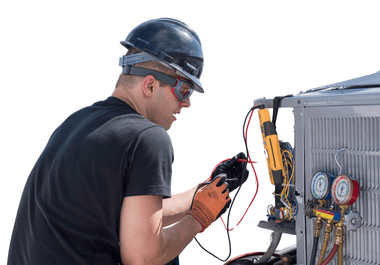
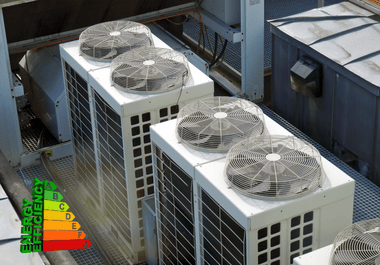
For many industrial facilities and commercial buildings, chillers account for a significant portion of total energy consumption. While modern chillers are designed for high performance, their real efficiency depends on how well they are selected, operated, and maintained over time. Metrics such as COP, EER, kW/ton, and IPLV provide valuable insight, but only when interpreted in the context of actual operating conditions.
Our experts help organizations move beyond nameplate efficiency by focusing on real-world chiller performance. By analyzing load profiles, part-load operation, and system design, we identify opportunities to reduce energy use while maintaining stable and reliable cooling.
We support our customers with:
Chiller efficiency assessments based on operating data and load conditions
System optimization strategies to improve COP, kW/ton, and part-load efficiency
Recommendations for control tuning and temperature setpoint optimization
Preventive maintenance planning to sustain long-term performance
Energy-saving solutions aligned with sustainability and ESG goals
With the right approach to chiller efficiency, cooling systems can deliver not only comfort and reliability—but also measurable energy savings and long-term operational value.

We provide end-to-end Energy Efficiency Audits that improve compressed air and cooling systems, uncover inefficiencies, and drive cost savings.