0
฿0.00
An empty cart
You have no item in your shopping cart


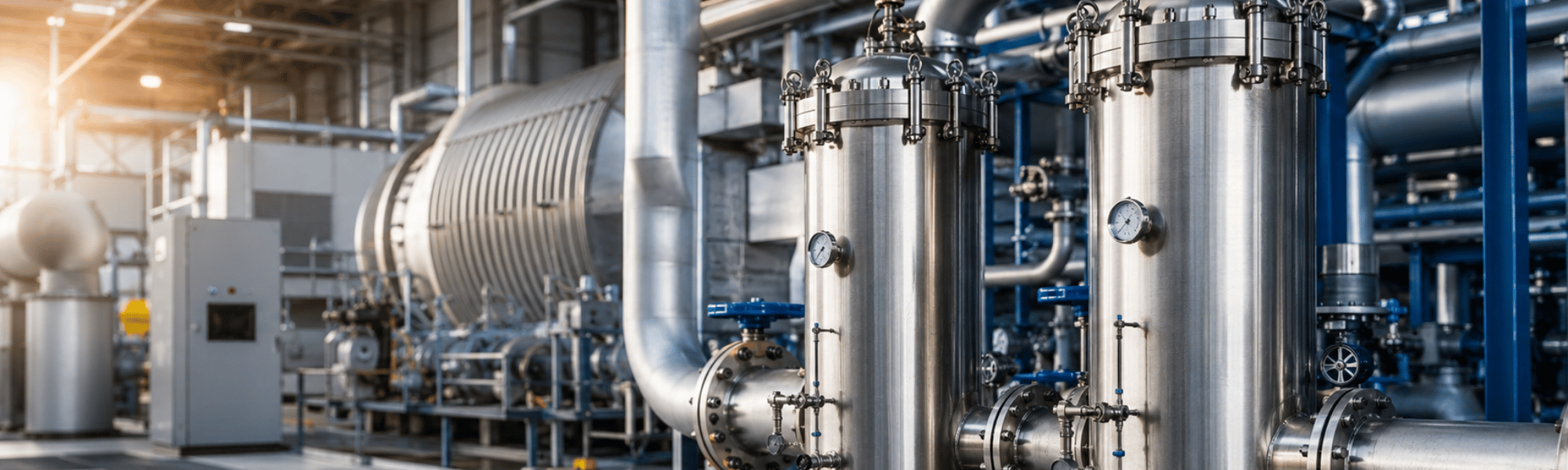
Power generation facilities operate under demanding conditions where even small amounts of contamination can cause serious operational problems. Dust, rust, sediment, water, oil aerosols, resin particles, and other impurities may enter important systems and gradually damage equipment. Process filters for the power generation industry provide an effective way to control these contaminants and maintain reliable plant performance.
Every stage of power generation depends on clean fluids and gases. Contaminated fuel can damage injection systems, while particles in lubricating oil can accelerate wear in turbine bearings and shafts. Suspended solids in cooling water may block nozzles, foul heat exchangers, and reduce heat-transfer efficiency. Contamination in condensate and boiler feedwater can also contribute to corrosion, deposits, and boiler tube failure.
A properly designed process filtration system removes unwanted particles and liquids before they reach sensitive equipment. This helps operators reduce unexpected shutdowns, extend component life, and maintain stable production.
Process filters can be installed throughout thermal, combined-cycle, gas-turbine, diesel, hydroelectric, and other power generation facilities.
Common applications include:
Removes solid particles, water, oil aerosols, and liquid hydrocarbons before fuel reaches turbines or engines.
Controls rust, sediment, water, gels, and other impurities that may damage pumps and injection nozzles.
Protects turbine bearings, gears, and shafts from fine particles, moisture, gases, and varnish.
Helps prevent valve sticking, abrasive wear, and unreliable control-system performance.
Reduces suspended solids and debris that may foul heat exchangers or restrict cooling passages.
Removes corrosion products, resin fines, and particulates to protect boilers and steam turbines.
Supplies cleaner water to turbine injection systems, supporting reliable operation and emissions control.
Removes particles and moisture that may reduce electrical insulation performance.
Effective process filtration delivers benefits beyond cleaner fluids. It can reduce maintenance frequency, lower replacement-part expenses, extend oil and equipment service life, and improve overall plant availability. Cleaner systems may also consume less energy because pumps, valves, injectors, and heat exchangers can operate closer to their intended efficiency.
Modern filtration systems can be selected for different flow rates, temperatures, pressures, contaminant levels, and required filtration ratings. Options include cartridge filters, bag filters, automatic self-cleaning filters, strainers, coalescers, oil purifiers, and high-flow filtration systems.
Filter selection should begin with a detailed review of the application. Important factors include fluid or gas type, operating flow, temperature, pressure, particle size, contaminant concentration, chemical compatibility, and allowable pressure drop. Maintenance accessibility and filter-element service life should also be considered.
Investing in suitable process filters for power generation is a practical preventive-maintenance strategy. By controlling contamination before it causes damage, power plants can improve equipment protection, operational efficiency, and long-term reliability while reducing the risk of costly unplanned downtime.
From our experience, effective process filtration is not simply about selecting a filter with the correct micron rating. Flow rate, operating pressure, temperature, contaminant type, filter media, and maintenance requirements all influence long-term system performance. An incorrectly selected filter can result in excessive pressure drop, frequent element replacement, higher operating costs, and insufficient protection for critical equipment.
Our engineering team works closely with power generation operators to understand their process conditions and identify the most suitable filtration solution for fuel, lubricating oil, hydraulic fluids, cooling water, condensate, and other critical applications.
Whether your goal is to reduce unplanned downtime, extend equipment life, improve system efficiency, or simplify maintenance, we are ready to help. Contact our team to discuss your application and develop a reliable process filtration solution tailored to your power plant.

Domnick (Thailand) is ready to assist you with your process filtration needs. Whether you’re designing a new system, upgrading your existing setup, or seeking to improve efficiency and purity across your operation, our filtration specialists are here to help you choose the right solution for your application.