0
฿0.00
An empty cart
You have no item in your shopping cart


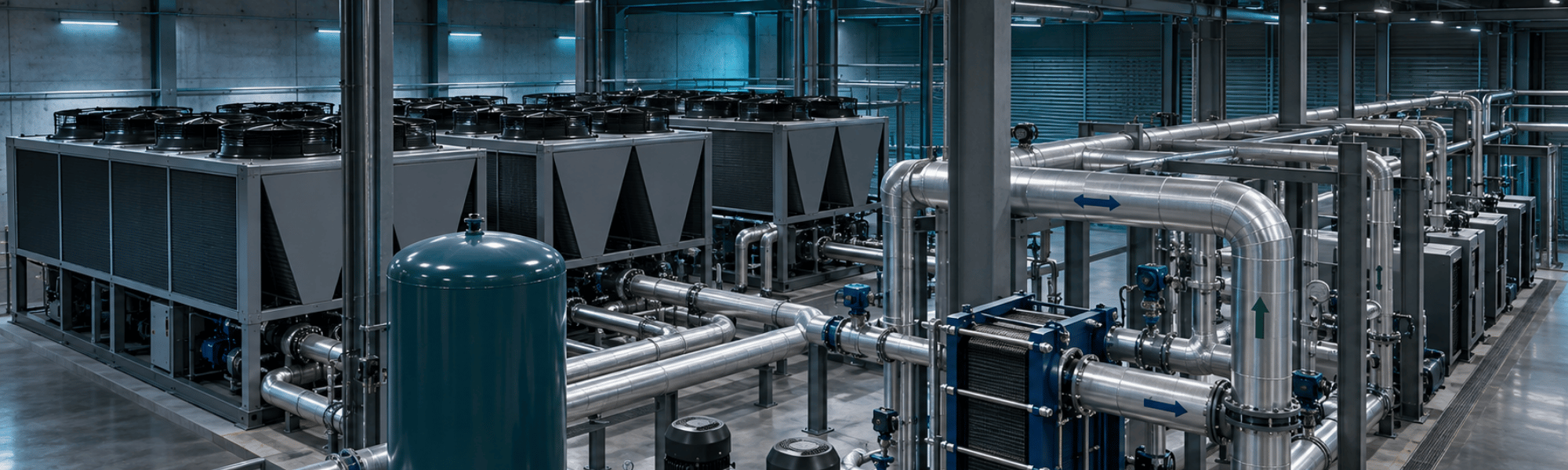
Temperature control is critical in plastic and rubber manufacturing. Processes such as injection moulding, blow moulding, extrusion, thermoforming, mixing, and rubber curing generate significant heat. If that heat is not removed consistently, manufacturers may experience dimensional variation, surface defects, longer production cycles, and premature equipment wear.
An industrial chiller provides a controlled supply of cooling water to production equipment. By maintaining stable process temperatures, the chiller helps manufacturers achieve consistent product quality while keeping machines operating efficiently.
Industrial chillers can support many plastic and rubber production processes, including:
In injection moulding, chilled water circulates through channels in the mould to remove heat from the molten material. Controlled cooling allows the product to solidify before ejection and can help maintain dimensional accuracy.
For extrusion, cooling may be required around extruder barrels, downstream water baths, calibration equipment, and finished profiles.
Rubber manufacturing also depends on stable temperatures during mixing, milling, extrusion, moulding, and curing. Excessive or inconsistent heat can influence material behaviour, cycle time, and final-product quality.
Cooling too slowly may extend production cycles and reduce output.
Cooling too quickly or unevenly can contribute to warping, shrinkage, internal stress, surface marks, and dimensional inconsistency.
A properly designed chiller delivers cooling water at a controlled temperature and flow rate. This can provide several operational benefits:
A closed-loop cooling system continually recirculates process water, helping keep dirt and environmental debris away from sensitive cooling channels.
Plastic and rubber manufacturers can select from portable or central chillers. A portable unit normally serves one machine or production cell, providing flexibility for smaller operations. A central system can supply multiple machines and may be more practical for larger facilities.
Chillers are also available with air-cooled or water-cooled condensers. Air-cooled systems generally require less supporting equipment, while water-cooled systems may suit facilities with an existing cooling tower and suitable water infrastructure.
Correct sizing requires more than checking machine power. Engineers should evaluate the type and quantity of material processed, throughput, incoming and required water temperatures, coolant flow, process heat load, ambient conditions, operating hours, simultaneous machine demand, and future expansion.
Dirty heat exchangers, restricted water flow, poor water quality, incorrect temperature settings, and inadequate ventilation can reduce chiller performance and increase energy consumption. Routine maintenance should include checking coolant condition, filters, pumps, condenser cleanliness, refrigerant operation, flow rate, and temperature difference.
Production teams should also avoid setting the chilled-water temperature lower than necessary. Excessive cooling wastes energy and may cause condensation on moulds or piping under humid conditions.
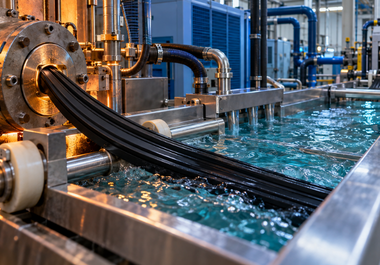
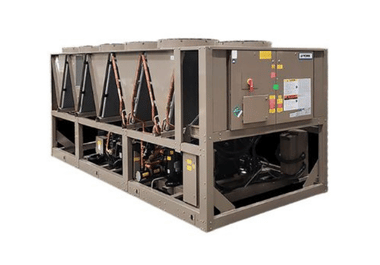
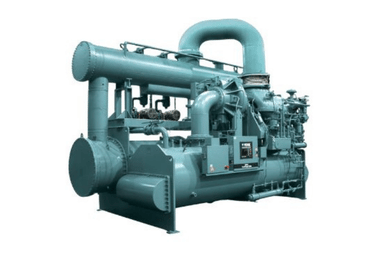
The best chiller is not necessarily the largest or the coldest—it is the system correctly matched to your production process. An undersized chiller may struggle during peak demand, while an oversized unit can increase investment costs and operate inefficiently.
Our engineering team can review your process temperatures, cooling load, flow requirements, operating environment, production schedule, and expansion plans. Contact us to develop a reliable industrial cooling solution that helps reduce defects, improve cycle times, protect equipment, and support the long-term growth of your plastic or rubber manufacturing operation.

Partner with an experienced HVAC integrator to ensure your facility meets operational, regulatory, and energy efficiency goals seamlessly.