Cross-flow dust extraction

FROM SPARKS TO CLEAN AIR: FILTRATION SOLUTIONS FOR MODERN METAL FABRICATION

Metalworking and fabrication processes can produce a complex mixture of dust, fumes, smoke, vapours, oil mist, and airborne metal particles. These contaminants may be generated during cutting, welding, blasting, coating, grinding, and surface preparation.

Without effective control, airborne contaminants can affect employee health, reduce visibility, contaminate machinery, shorten filter life, increase housekeeping requirements, and create fire or explosion hazards.

A clean-air filtration system must therefore be designed around the actual process and contaminant. Fine laser-cutting dust, abrasive-blasting debris, welding fumes, and thermal-spray overspray have different characteristics and should not automatically be handled by the same filtration solution.
Fiber-Laser Cutting Dust

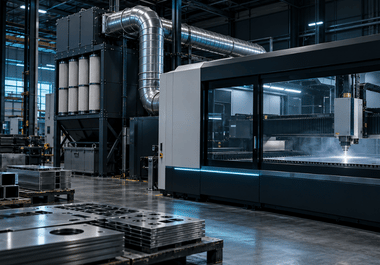
Fiber-laser machines provide high cutting speeds and precision, but they can generate a large volume of extremely fine metal particles. Higher-powered machines may produce more dust than an older or lower-powered collection system was designed to handle.

These particles may:

01Escape from the cutting enclosure
02Accumulate on sensors, lenses, and actuators
03Affect cutting performance
04Become embedded in filter media
05Increase filter-loading and maintenance requirements
06Present health or combustion risks, depending on the material

Fiber-laser dust can be microscopic, irregularly shaped, and difficult to remove from filter media. System design must consider airflow, total filter area, air-to-cloth ratio, filter-cleaning performance, material composition, and the laser manufacturer’s extraction requirements.

An extraction system that was suitable for a lower-power machine may not be adequate after a laser upgrade.

Abrasive-Blasting Rooms

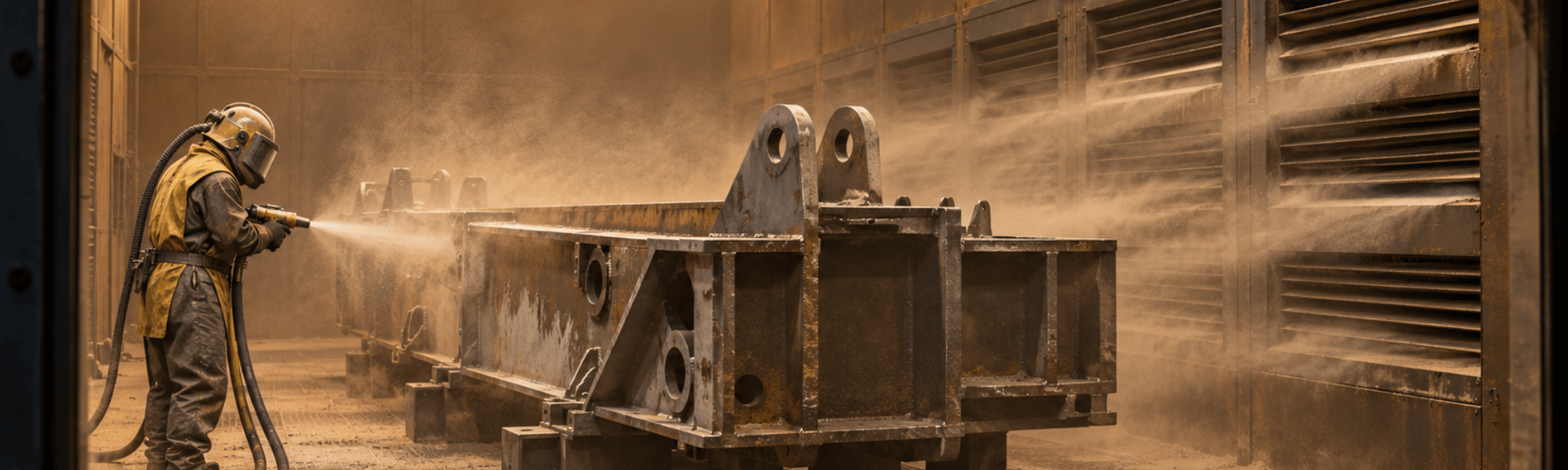
Abrasive blasting produces high concentrations of dust from three potential sources:

SOURCE 01The blasting medium
SOURCE 02The base material or substrate
SOURCE 03Paint, rust, coatings, and surface contamination

Common blasting media include steel shot, garnet, glass beads, mineral media, and other abrasives. The resulting dust may also contain silica, lead, chromium, nickel, or other substances originating from the blasted surface.

A blast room creates a contained environment, but it still needs properly directed airflow to move airborne dust away from the operator and towards the extraction points. The collector and filter media must be selected according to the blasting material, substrate, coating, dust loading, and recycling process.

Poor airflow may reduce visibility and allow fine dust to remain suspended after blasting has stopped.

Resistance-Welding Fumes

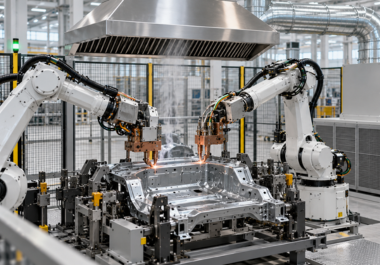
Resistance welding often creates less visible smoke than MIG or stick welding, but this does not mean the process is free from airborne hazards.

Heat applied to galvanized, painted, coated, lubricated, or adhesive-covered metal can release:

PROCESS EMISSIONS Airborne Contaminants
Fine metallic particles
Zinc-oxide fumes
Oil mist
Vapours
Gases and odours
Contaminants from coatings and sealants

Standard particulate filters may not capture gas-phase contaminants. Depending on the process, the solution may require source-capture hoods, enclosures, extraction arms, backdraft tables, oil-resistant media, gas-phase filtration, or external exhaust.

Robotic resistance-welding cells can often be enclosed and extracted from above. Manual workstations require extraction that pulls contaminants away from the operator’s breathing zone.

Thermal-Spray Overspray

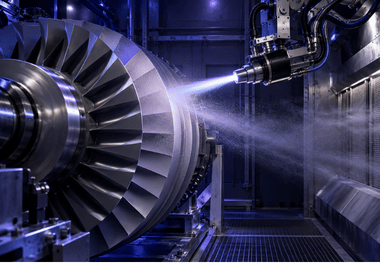
Thermal spraying heats or melts metal, ceramic, plastic, alloy, or composite feedstock and deposits it onto a surface. Not all material reaches the component. The remaining fine airborne material is known as overspray.

Thermal-spray processes can produce large quantities of extremely fine particles, along with gases from the heating process. These contaminants may affect employee health, settle on coated surfaces, interfere with equipment, or create combustible-dust hazards.

Containment Strategy

Thermal spraying is commonly performed inside a booth or enclosure maintained under negative pressure. The filtration system may also require:

Filtration System Requirements

High-capacity extraction
Suitable high-temperature filter media
Spark control
Explosion isolation or venting
Dust-discharge equipment
Make-up air
Safe external exhaust

The exact requirements depend on the feedstock, deposition rate, temperature, dust properties, and applicable safety assessment.

Source Capture or Ambient Filtration?

Source capture collects contaminants close to where they are generated. Examples include:

Source Capture

Laser-machine extraction connections
Enclosed robotic welding cells
Hoods above welding stations
Backdraft or downdraft tables
Negative-pressure blast rooms
Thermal-spray booths
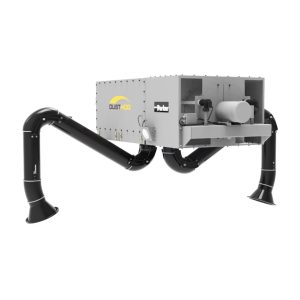
Extraction arms for manual work

Ambient Filtration

Capturing contaminants at the source normally prevents them from spreading through the facility.

Ambient filtration can provide additional control where contaminants escape primary capture or where large and mobile workpieces make fixed extraction difficult. However, it should complement source control rather than automatically replace it.

Selecting the Correct Filtration System

Important design factors include:

01Contaminant type and chemical composition
02Particle size and shape
03Dust concentration and loading
04Required capture velocity
05Total airflow
06Process temperature
07Oil or moisture content
08Filter efficiency and media compatibility
09Air-to-cloth ratio
10Duct velocity and routing
11Indoor-air recirculation requirements
12Dust-disposal method
13Fire and explosion characteristics
14Maintenance access

A standard cartridge collector may be suitable for some dry particulate applications, while other processes may require specialised filter media, gas-phase after-filters, coalescing filtration, high-temperature protection, or a wet-collection system.

Dust and fume testing should be completed when the material properties are uncertain.

Fire and Combustible-Dust Protection

Metalworking processes may produce sparks, hot particles, and combustible dust. Aluminium, magnesium, titanium, and some thermal-spray materials can present particularly serious hazards under certain conditions.

Depending on the risk assessment, a system may require:

01Spark arrestors
02Fire detection and suppression
03Explosion venting
04Flameless venting
05Explosion isolation valves
06Rotary airlocks
07Conductive or antistatic components
08Safe collector location
09Continuous monitoring

Explosion protection must be based on tested dust characteristics, process conditions, local requirements, and qualified engineering—not assumptions based only on the material name.

Monitoring and Maintenance

Performance Monitoring

A filtration system must maintain the required airflow throughout operation. Differential-pressure monitoring can indicate filter loading, while airflow sensors can reveal blocked ducts, fan problems, open access doors, or failed extraction points.

Preventive Maintenance

Preventive maintenance should include:

Inspecting and replacing filter elements
Checking automatic filter-cleaning systems
Emptying dust bins safely
Inspecting ducts for accumulation
Testing fire and explosion-protection devices
Checking seals, hoods, and enclosures
Confirming fan and airflow performance
Reviewing changes to materials or production volume

Note From Our Expert

Clean-air filtration for metal fabrication cannot be designed from airflow alone. The system must account for what is being cut, welded, blasted, or sprayed—and how the resulting contaminant behaves after entering the airstream.

A collector designed for dry laser dust may not manage oily resistance-welding emissions, while a standard welding-fume system may be unsuitable for high-volume thermal-spray overspray or abrasive-blasting dust. Filter media, source capture, duct velocity, temperature control, gas-phase filtration, and fire protection must all match the process.

Our engineering team can assess your production equipment, materials, contaminant characteristics, plant layout, airflow, and operating risks. Contact us to develop a clean-air solution that protects employees, supports equipment reliability, simplifies maintenance, and keeps your metalworking operation productive.

ton

Domnick (Thailand) is here to help. Whether you’re in the early stages of planning your clean air filtration system for a new facility or considering an upgrade or expansion of your existing setup, our team of Air Filtration and Collector System design experts is ready to assist you.

DH Line QR