0
฿0.00
An empty cart
You have no item in your shopping cart


With the growing popularity of carbonated beverages, many new entrepreneurs in the food and beverage industry are eager to enter the market. However, competing with established soft drink brands—known for strong customer loyalty and familiar flavors—can be challenging.
Yet, the rise of “Craft Soda” presents a fresh opportunity. With creativity and innovation, this niche beverage segment is gaining attention for its uniqueness, premium image, and appeal to health-conscious consumers.
Consumers today expect fresh, flavorful, high-quality food all year round, regardless of where the product is sourced or how far it travels. At the same time, retailers and manufacturers face growing pressure to reduce food waste, extend shelf life, and minimize the use of chemical preservatives — all without compromising safety or taste. These demands have made food shelf life extension a critical focus in food production and packaging.
One of the most effective strategies to keep food fresher for longer is to control the environment inside the packaging — especially the amount of oxygen. That’s where nitrogen gas comes in. Nitrogen has become an essential component of food preservation systems because of its ability to slow spoilage, reduce microbial growth, and protect product quality — all while being safe, affordable, and compatible with modern packaging technology.
Oxygen may be essential for human life, but in the context of food storage, it triggers several processes that cause quality to deteriorate:
Oxygen reacts with fats, oils, and other organic compounds, causing rancidity, off-flavors, and color changes in products like chips, nuts, meat, and baked goods.
Many spoilage bacteria and molds require oxygen to grow. Reducing oxygen significantly slows down their activity, effectively prolonging shelf life.
Oxygen can also activate enzymes that lead to discoloration and texture changes in fresh produce like fruits and vegetables.
Because of these effects, simply leaving food exposed to ambient air results in rapid deterioration — often within a matter of days. The solution? Replace the oxygen inside the package with an inert gas that won’t react with food components.
Nitrogen is a naturally abundant, inert gas that makes up about 78% of the air we breathe, but unlike oxygen it does not participate in oxidation reactions or microbial metabolism. By displacing oxygen inside food packaging and storage environments, nitrogen helps preserve food quality in several ways:
By replacing oxygen, nitrogen slows the chemical reactions that degrade fats, oils, and color compounds in food — meaning products remain fresh and flavorful longer.
Oxygen is required for many spoilage organisms to thrive. When oxygen is removed, bacterial and fungal growth is restricted, keeping food safer and fresher.
Nitrogen flushing helps maintain package shape and integrity — especially for delicate or lightweight products like chips, nuts, and baked goods — by preventing vacuum collapse after the bag is sealed.
Because nitrogen doesn’t react with food molecules, it helps preserve aroma, taste, texture, and nutrients over the product’s intended shelf life.
Nitrogen is beneficial for a wide range of food products including:
Snack foods (chips, crackers, nuts) that are sensitive to oxidation
Coffee beans and ground coffee whose flavors degrade with oxygen exposure
Meat, poultry, and seafood where aerobic bacteria cause rapid spoilage
Fresh produce where oxidation and respiration shorten freshness
Ready-to-eat meals that require extended shelf life without preservatives
For example, using nitrogen in packaging for fatty meats or oily products can prevent rancidity, while for fresh produce nitrogen can slow down browning and enzyme activity that would otherwise degrade quality.
MAP is a packaging technology that replaces the oxygen in a sealed package with a specific mixture of gases — often including nitrogen — to create an environment that discourages spoilage. Nitrogen is typically the main component, displacing oxygen and reducing oxidation reactions.
There are two main MAP methods:
Active MAP: Introducing nitrogen and other gases directly into the package before sealing
Passive MAP: Allowing gas composition to adjust over time via respiration and packaging film properties
Active MAP is usually used for meat, seafood, and other perishable products where precise control is essential, while passive MAP can suit products that naturally respire, like certain fruits and vegetables. In both cases, nitrogen helps maintain a low-oxygen environment that prolongs freshness.
One of the challenges many food producers face is access to a reliable, high-quality nitrogen supply. Traditional supply methods — like delivered cylinders or liquid nitrogen — can be expensive, require storage space, and involve logistic complexities.
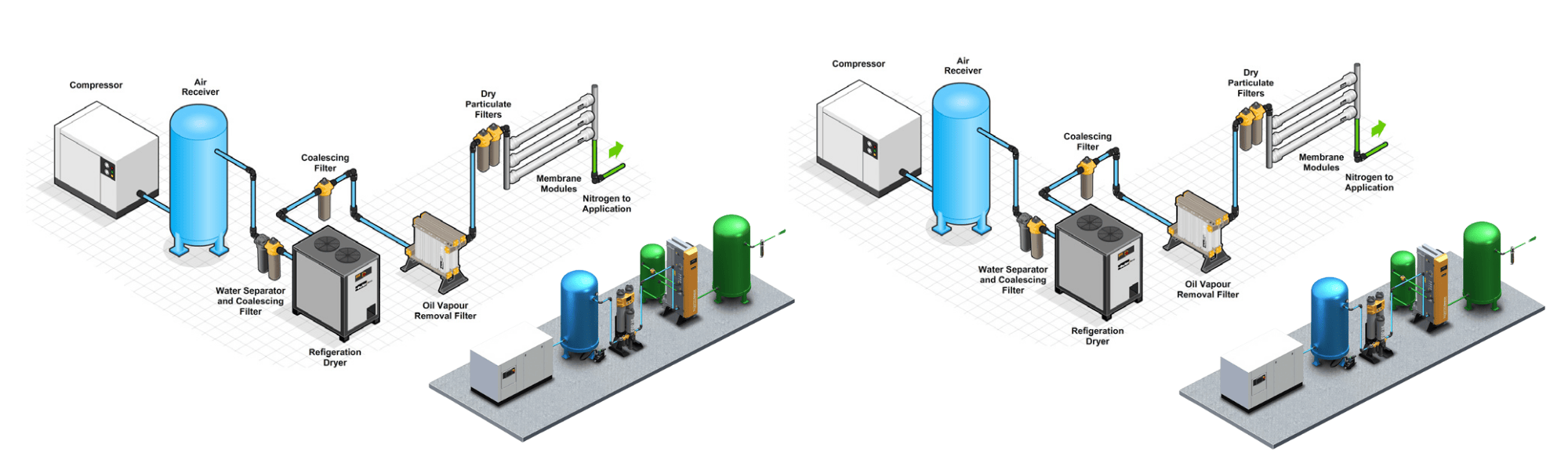
A more efficient and cost-effective solution is on-site nitrogen generation, where nitrogen is produced directly at the food processing or packaging facility using gas separation technologies such as Pressure Swing Adsorption (PSA). This approach offers several advantages:
Once installed, an on-site generator produces nitrogen on demand, reducing or eliminating the recurring cost of purchasing and transporting cylinders.
Nitrogen purity directly impacts shelf life performance. On-site systems provide consistent, high-quality nitrogen suited for food applications.
With a generator on site, manufacturers avoid production disruptions caused by delayed deliveries or stock shortages.
In addition to extending shelf life, nitrogen use can also:
Improve product appearance by preventing browning and oxidation
Enhance consumer confidence through longer freshness periods
Reduce reliance on chemical preservatives
Support sustainability goals by minimizing food waste
With global markets demanding higher quality and longer availability of food products, nitrogen technology helps manufacturers stay competitive without compromising on safety or taste.
In a rapidly evolving food market, extending shelf life is not just a technical challenge—it’s a business imperative. Nitrogen, with its inert, non-reactive properties, plays a central role in preserving food quality and slowing spoilage mechanisms that degrade products over time. By incorporating nitrogen into packaging processes, especially through Modified Atmosphere Packaging, manufacturers can deliver fresher products, reduce waste, and meet consumer expectations for quality.
Investing in reliable nitrogen solutions — particularly on-site generation — allows food producers to manage costs, maintain consistency, and enhance product performance across the supply chain.
Nitrogen isn’t just a gas — it’s a strategic tool for modern food preservation.
Extending food shelf life starts with controlling oxygen exposure during packaging and storage. Nitrogen offers a safe, cost-effective solution to reduce oxidation, protect product freshness, and maintain consistent quality across every batch.
Our team provides tailored nitrogen generation solutions for food and beverage applications, helping manufacturers improve efficiency, reduce gas supply costs, and ensure reliable performance. With proper system design and ongoing support, businesses can confidently deliver fresher products to market while optimizing operational control.

Domnick (Thailand) is here to help. If you are in the early stages of planning your gas generator system needs for a new facility, or if you are planning to upgrade or add to an existing system, we recommend that you speak with one of our Gas Generator System design experts.