0
฿0.00
An empty cart
You have no item in your shopping cart


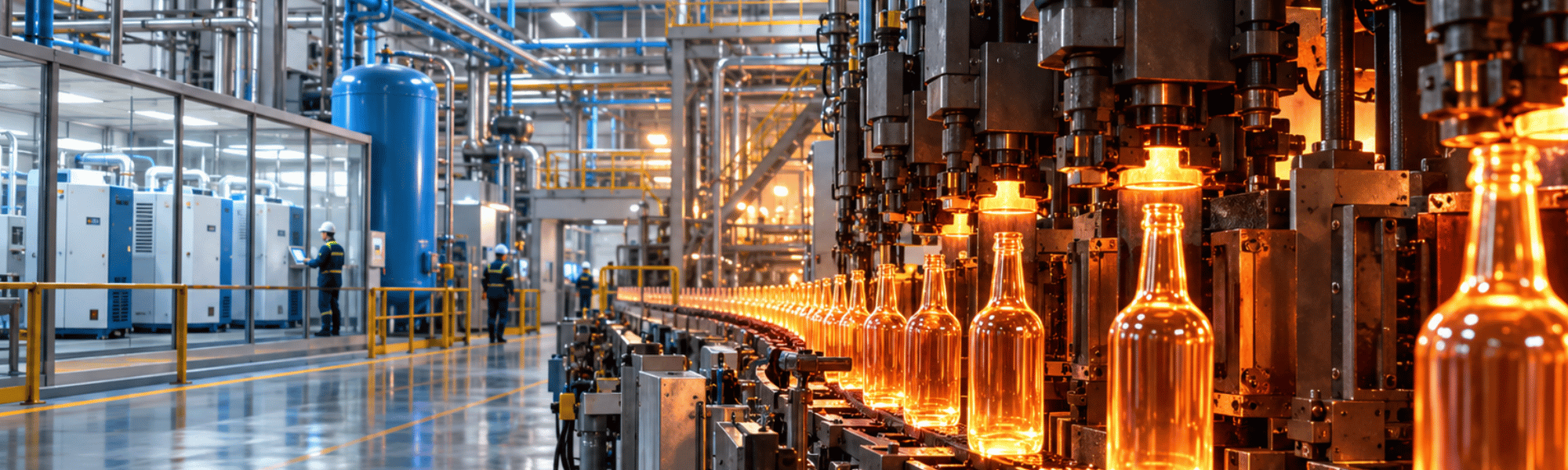
Glass manufacturing combines extreme heat, continuous production, and precise forming processes. From bottles and containers to glassware, tubes, and specialised products, compressed air supports many critical operations throughout the plant.
Large volumes of clean, dry, and stable compressed air may be required for glass forming, pneumatic machinery, material conveying, instrumentation, and general plant utilities. An unreliable supply can affect product consistency, increase waste, and interrupt production.
Depending on the production process, compressed air may be used for:
Container-glass production often uses compressed air to form molten glass inside moulds. Because air pressure directly influences the forming process, fluctuations can contribute to dimensional variation, surface defects, or unstable machine operation.
Different sections of a glass plant may have different airflow and pressure requirements. The correct compressor arrangement therefore depends on production volume, operating hours, pressure levels, air-quality requirements, demand variation, and redundancy.
Oil-free screw compressors can provide continuous compressed air while reducing the risk of lubricant entering sensitive processes. They may be suitable for glass-forming lines, instrumentation, and other applications where air quality is important.
Centrifugal compressors can be effective for large plants with high, relatively stable airflow requirements. They are often considered for continuous-duty base-load demand and can deliver oil-free compressed air.
Reciprocating compressors or booster systems may be used for specialised or higher-pressure duties. A booster can increase air from a low-pressure network to the pressure required by selected equipment, avoiding the need to operate the entire plant at unnecessarily high pressure.
Compressed air quality is just as important as capacity. Moisture, particles, and oil contamination can damage pneumatic equipment, affect control reliability, block small passages, and compromise finished products.
A complete system may include dryers, particulate filters, coalescing filters, condensate separators, automatic drains, air receivers, and dew-point monitoring. Treatment equipment should be sized for actual flow, ambient conditions, and the air-quality requirement at each point of use.
Compressed air can represent a significant share of a glass plant’s electricity use. Leaks, unnecessary pressure, inefficient compressor sequencing, excessive blow-off, and using high-pressure air for low-pressure applications can all waste energy.
Flow meters, power meters, pressure sensors, and system monitoring help identify how much air is produced, where it is consumed, and how efficiently each compressor operates.
In one Dutch glass-container plant case study, measurement data from 20 airflow meters supported the redesign of its low- and high-pressure networks. The project incorporated improved controls, a booster compressor, and better coordination between the two systems. It reportedly saved approximately US$150,000 annually and achieved a payback period of less than two years. These results are specific to that facility and should not be treated as a guaranteed outcome for every plant.
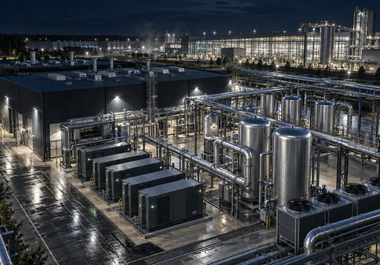
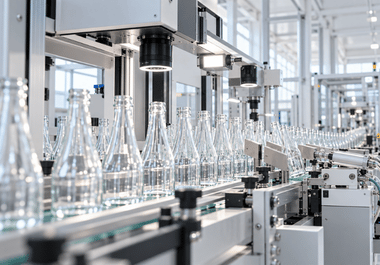
The most efficient glass-plant air system is not simply the compressor with the lowest advertised power consumption. Efficiency depends on how compressors, boosters, dryers, filters, receivers, controls, and distribution piping perform together under actual production demand.
Operating every application from one high-pressure network may waste energy, while poor compressor sequencing can cause unnecessary unloading or blow-off. Before adding capacity, plants should measure airflow, pressure, power consumption, and demand patterns across the system.
Our engineering team can assess your compressed-air demand, air quality, pressure levels, treatment equipment, controls, and distribution network. Contact us to develop a reliable solution that supports consistent glass quality, improves plant uptime, and reduces long-term energy and maintenance costs.

Save energy, lower costs, and ensure reliable clean air. Whether building new or upgrading, Domnick (Thailand) delivers expert compressed air system design tailored to your needs