0
฿0.00
An empty cart
You have no item in your shopping cart


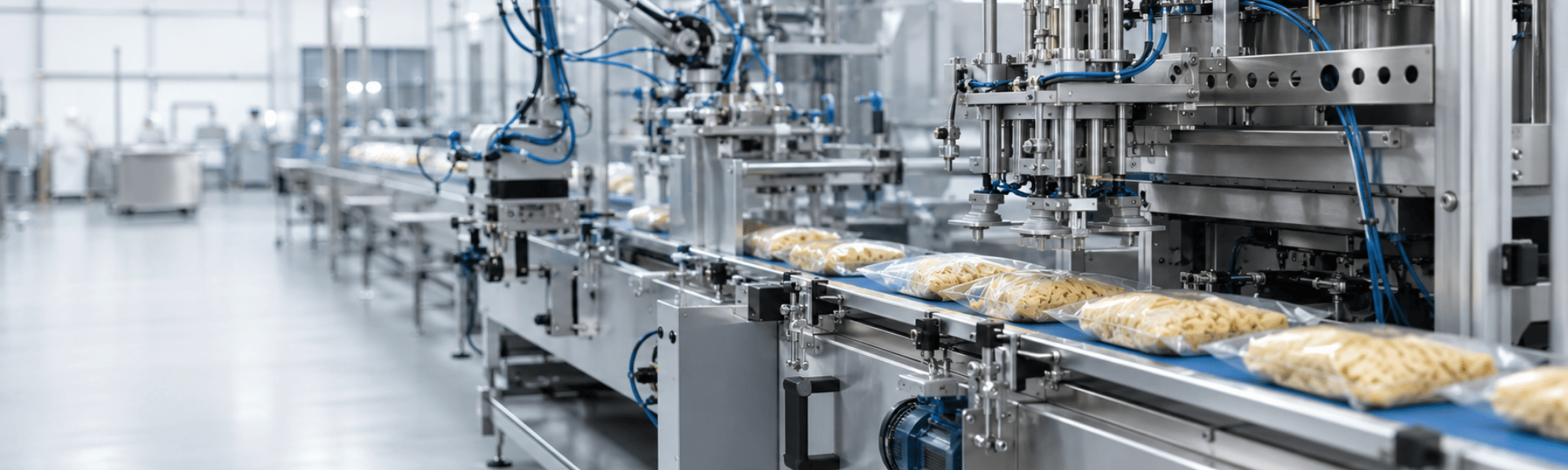
Packaging operations depend on speed, accuracy, cleanliness, and uninterrupted production. From forming and sealing packages to operating pneumatic equipment, compressed air is one of the most important utilities in a modern packaging facility. A properly designed air compressor system helps manufacturers maintain consistent production, protect product quality, and respond efficiently to changing demand.
Compressed air can be used throughout food, beverage, pharmaceutical, cosmetic, and general consumer-product packaging lines. Its flexibility makes it suitable for both direct production processes and supporting plant utilities.
Common applications include:
Because compressed air may come into direct or indirect contact with packaging and products, air quality must match the requirements of each application. Moisture, oil, dust, and microorganisms can affect product integrity, damage equipment, create packaging defects, or interrupt production.
Sensitive applications may require oil-free compressed air or carefully treated air with appropriate filters and dryers. This is particularly important in food, pharmaceutical, and personal-care packaging, where contamination can lead to rejected products, additional cleaning, customer complaints, or damage to brand reputation.
Compressed air treatment can include dryers, particulate filters, coalescing filters, activated-carbon filtration, condensate management, and air-quality monitoring. The correct combination depends on the required pressure, dew point, particle level, oil concentration, and risk of product contact.
Compressed air is valuable, but inefficient system operation can increase production costs. Leaks, excessive pressure, incorrect compressor sizing, dirty filters, pressure loss, and uncontrolled demand all waste energy.
A packaging facility can improve efficiency by matching compressor output to actual production demand. Variable-speed operation, central system controls, adequate air receivers, heat recovery, leak detection, and regular maintenance can further reduce operating costs.
System reliability is equally important. A compressor failure can stop multiple packaging machines at the same time. Facilities with continuous production requirements should consider backup capacity, remote monitoring, preventive maintenance, and a properly designed air distribution network.
Improving compressed air efficiency and system reliability helps packaging facilities reduce operating costs while supporting stable, continuous production.
Selecting an air compressor for packaging requires more than comparing motor power or purchase price. Manufacturers should evaluate total air demand, operating pressure, air-quality requirements, production schedules, demand fluctuations, installation conditions, energy consumption, and future expansion.
The right compressor system should be selected around the requirements of the complete packaging operation—not simply the compressor's rated motor power or initial purchase price.
From our experience, many packaging facilities focus on individual machines without reviewing how the complete compressed air system supports production. This can lead to unstable pressure, unnecessary energy use, contamination risks, and frequent maintenance.
Our engineering team can assess your air demand, application risks, required air quality, and operating conditions before recommending a suitable solution. Whether you want to improve product quality, reduce energy costs, expand production, or increase system reliability, contact us to develop a compressed air solution built around your packaging process.

Save energy, lower costs, and ensure reliable clean air. Whether building new or upgrading, Domnick (Thailand) delivers expert compressed air system design tailored to your needs.